ThrustWSH Update #2 Awakening Sleeping Giants
ThrustWSH Update #2 Awakening Sleeping Giants Read More »

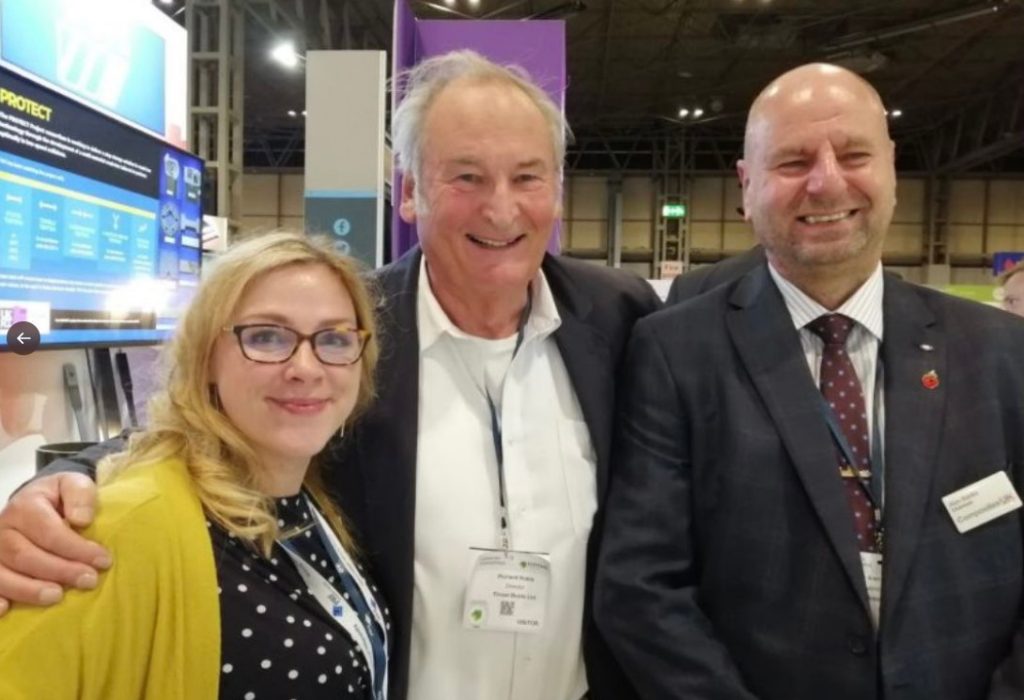
There has been a very positive industry reaction to our recent appearance at the composites trade show with partners PRF. This what Dr Alan Banks (UK Lightweight Innovations Manager at Ford UK) had to say.
Positive industry reaction Read More »
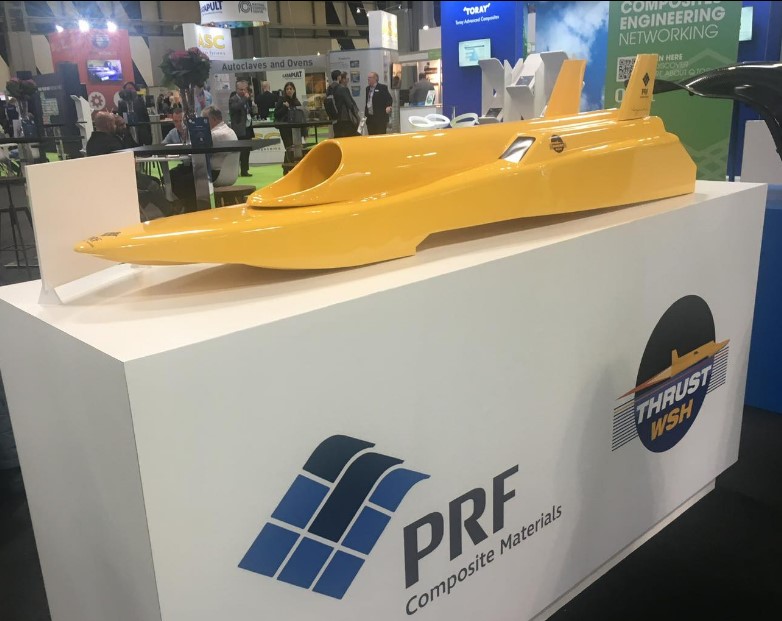
The Thrust WSH team would like to thank PRF Composite Materials for their support hosting and displaying the Thrust WSH project at the Advanced Engineering trade show at the NEC Birmingham UK. PRF Composite Materials, working in conjunction with Supernatural-X, are producing the test boat for Thrust WSH. Richard and others from the ThrustWSH team
ThrustWSH at PRF show Read More »
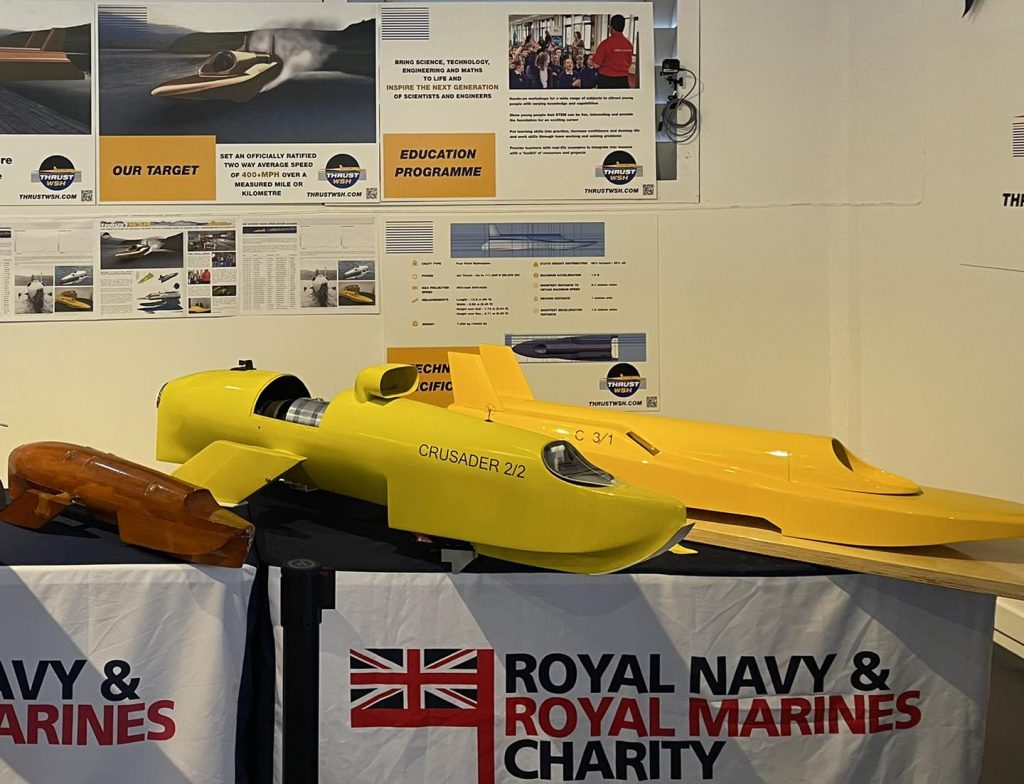
As a team new to the WSR it makes sense to collect data from instrumented models to at least check out the basics – does it float, does it steer, does it get up on to plane, does it handle? Tests began using an exact copy in composite of the test model for Railton’s follow
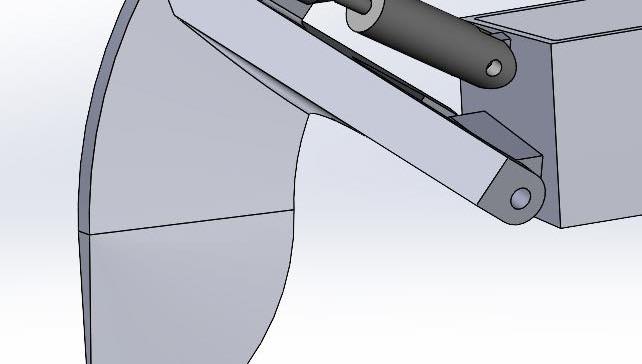
We’ve mentioned the use of twin rudders but there are of course other options to the traditional vertical blade type rudder. Lee Taylor used thrust vectoring on his Hustler jet boat but no thrust means no vectoring and no control – not good. On a proposed later design he extended the vertical vectoring blade into
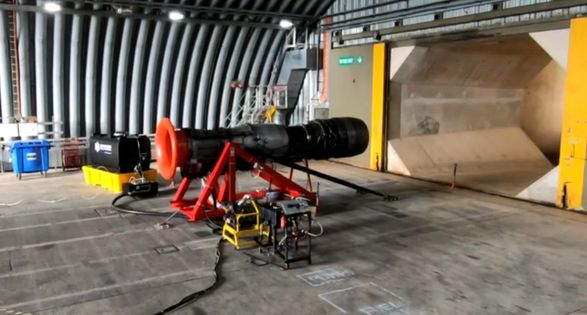
It’s not all drawings and small models, we have to run big tests in the early stages too.Where else were 2 of these engines used? (answer: Thrust SSC)
It’s not all drawings and models … Read More »
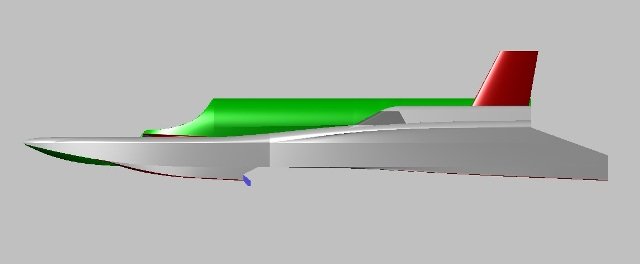
Our key design principle is stability across the whole speed range rather than outright performance optimised efficiency. Aerodynamics is anything around the craft (including the tunnel area) while hydrodynamics is anything on or in the water. The combination of both and a full understanding of it tells us how stable our design is and what